 The unassuming
 Piddock clam
 Hidden from view
 Eight years or more burrowing
 12 degrees forward
 Shell rasping against rock
 Then 12 again
 30 times until the circling drill
 Of its own self
 Turns complete —
 Again and again.

 On the cobbled beach
 Tide-filled, summer camp children-filled
 Moving like sanderlings escaping the waves
 Florescent lime t-shirts
 So they are all easily in view
 I scramble
 Over glinty metamorphics
 Some larger than
 Suitcases
 Fallen from the leaning, torn-open
 Conglomerate cliffs
 To find each
 holy rock
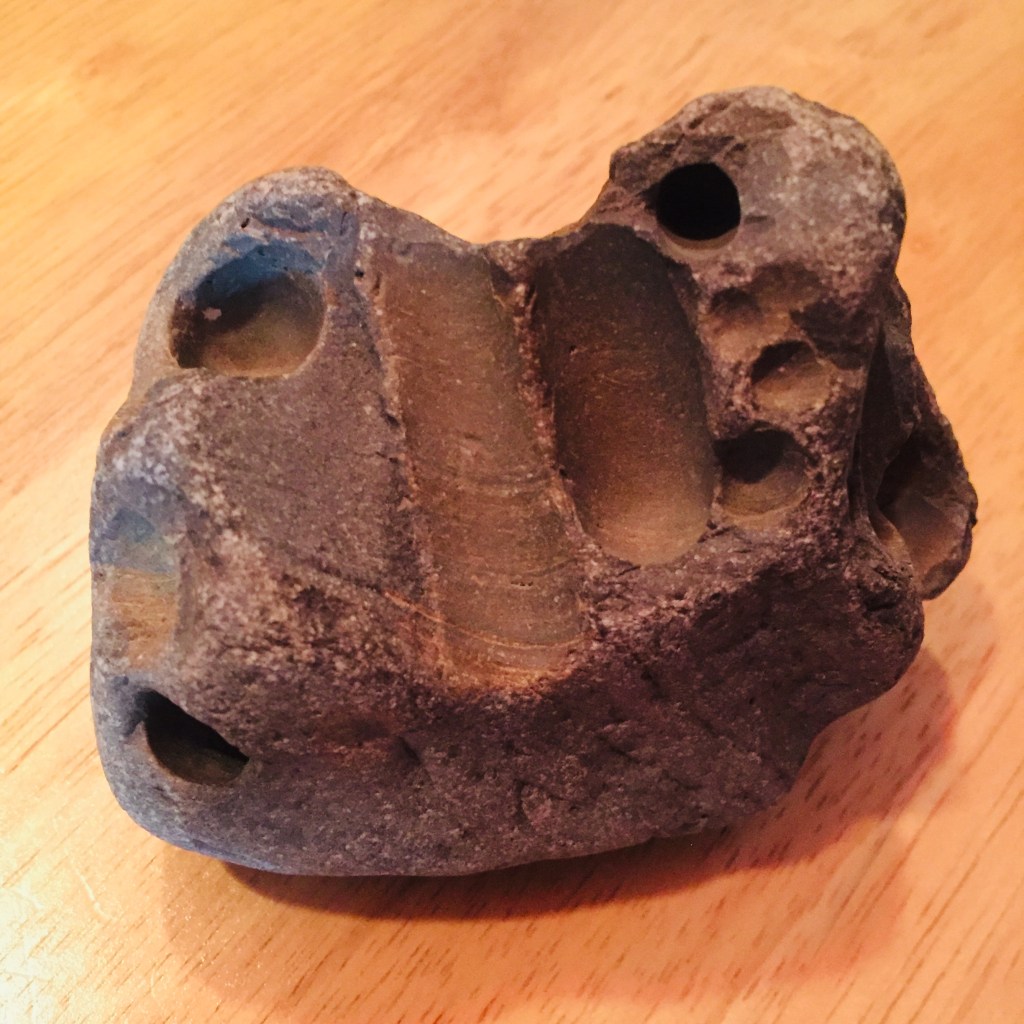
 Each curiously carved and hollowed
  Remnant of these clams’
 Industry.

 Grey sandstone their substrate
 Cylindrical passages carved as if
 by auger and  bit
 Many parallel, not overlapping
 Partially or all the way through.

 Surf-rounded
 Some small as pendants
 To wear round the neck, ready
 For its cord or chain
 For years I have passed them by
 Never guessing
 Them artifacts of undersea molluskan
 Conurbations.

 What cities
 unknown and unremarked
 Lie all about us
 We urban sophisticates with our
 surf toys and magic wheeled vehicles
 Think only of ourselves
 While much older are the city builders
 Under wave
 Atlantians that need no Plato
 To tell their tale
 A million years and more
 Chiseling out the boulevards and avenues.

 And what of the ants
 The birds
 The corals and mangroves
 All diligent in their complexity
 With no recourse to our war, famine or fame
 And I say
 We city people
 Are so much younger
 And still have so much to learn.


 5 August 2019
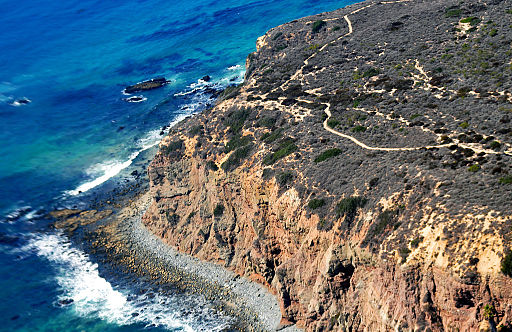
 Beneath the Dana Point Headlands
 Approaching high tide
 Gift-wrapping the air
 Swirling, light-footed crowd fall
 Making me smile —
 First Snow.

 •

 Fire to Ice
 Just yesterday, red flag wildfire warning
 Lingring late into November
 Unseasonably warm, low humidity, high winds
 Power blackouts, evacuations
 Spot fires no more than a mile away
 Attacked with truck, dozer and airplane
 Mega fires further out
 Darkened sky smoke plumes.

 Then in a day
 Temperature drops a full 20
 Snow falls
 Five days of it now, five more to come

 Seasons askew, weather extreme
 New normal in mountain foothills
 Schools close, stores sell out of ice
 Then batteries, then generators
 Cars troll the darkened streets
 An apocalypse not of
 Wrath but denial.

 •

 Gift-wrapping the air…
 However we reform
 And remake you
 You are still the mystery
 And surprise —
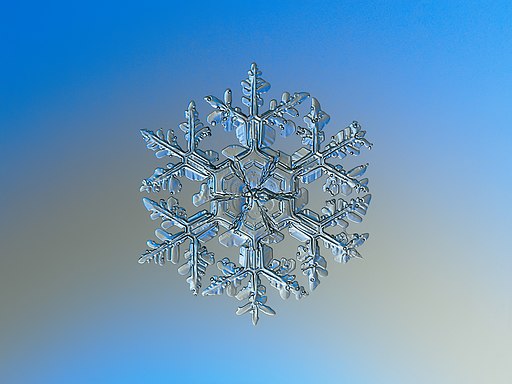
 This falling of cold white specks
 From an empty sky
 This transformation unbroken
 From far ocean to mountain storm
 To snowpack to spring melt
 This float of crystal sculptures
 Suspended in air
 Enclouding us

 I bow
before the mystery
 …First snow


 30 November 2019
 Cedar Wings Cottage, 2680'
 Storm-covered sky
Monday, the 25th was a high wind weather warning day, with the possibility of power shutoffs to guard against wildlife caused by electrical wires. The weeks previous saw no less than 7 power shutoff events, lasting 1 to 4 days, along with numerous small fires and a few catastrophic mega fires that burned homes in both northern and southern California. An unusually persistent high-pressure ridge had sat over Northern California, pushing aside any of the usual rain that typically arrives in the Sierra Nevada foothills after October 31st.
Tuesday, the 26, storms finally broke through, bringing a sudden, dramatic drop in temperatures and by afternoon, snow, first as white specks easily mistaken for ash from a fire, then full flakes ‘enclouding’ us in their free-fall. Day five of this arrival of winter finds us with snow still covering the ground except where the snow plows have cleared streets, with two storms around behind us, a third forecast for tomorrow, and generally cold rain or snow forecast for a full week. On the first day after storm we saw the juncos foraging for last morsels on newly fallen snow and out of sympathy put out bird seed, which they finally found – four days later – a troop of 20 dark-eyed juncos gathering in great activity of hopping, pecking, and wheeling flight as they feasted in the cold.
Both the South Fork Yuba and North Fork American drainages have their headwaters against 8 to 9 thousand foot peaks of the Sierra Crest, and both flow roughly parallel to each other to the west. They differ, however, in that the North Fork American is two to three times deeper than the Yuba. One outcome of this was that ancient glaciers filling the upper Yuba basins at various times overrode the divide between the two, creating a section of the divide where large ice falls descended into the deeper American, to join its main glacier far below.
Two recent outings to the divide gave an opportunity to better visualize this unusual topography and the spectacle of massive ice field and long-tongued glaciers that rode down from the summits as recently as 15 thousand years ago.
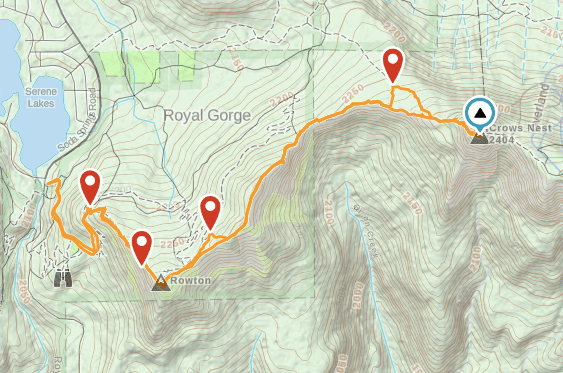
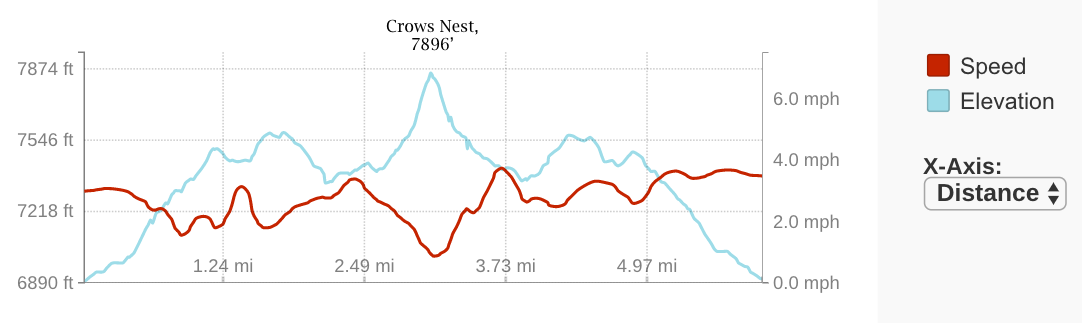
Razorback Ridge to Crows Nest — 17 Nov. 2019, 6 miles return, elevation gain +1,006
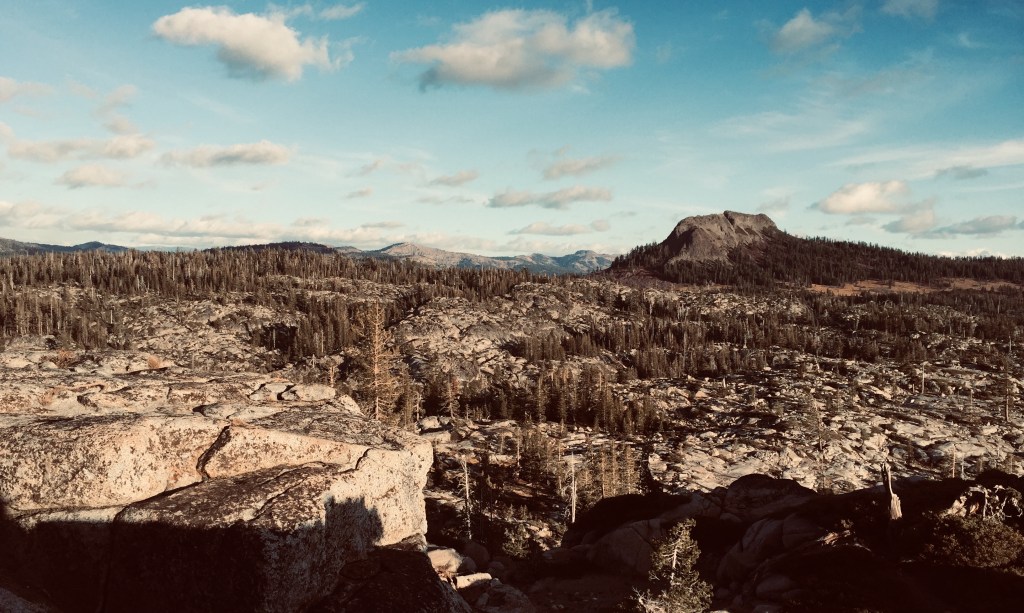
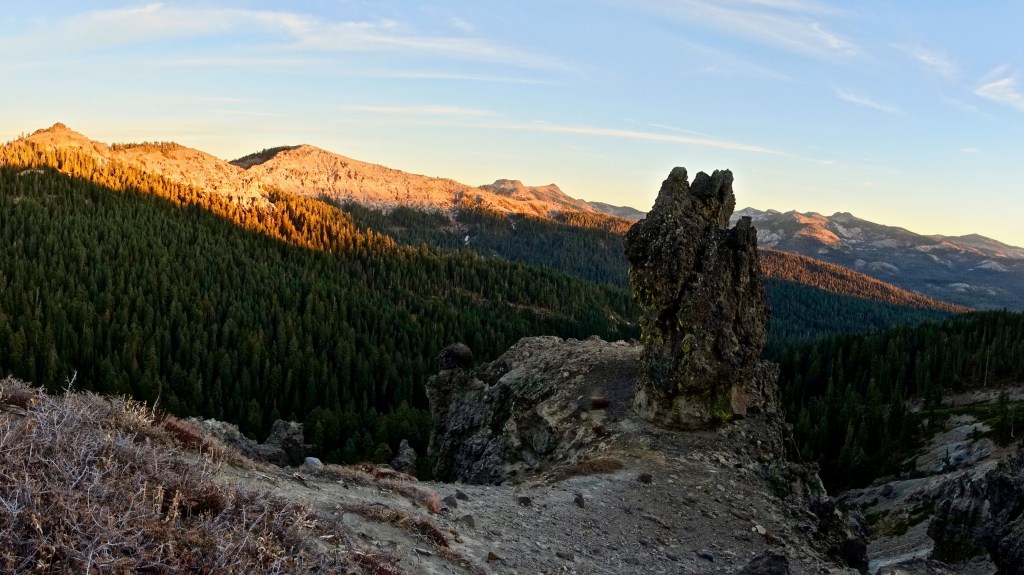
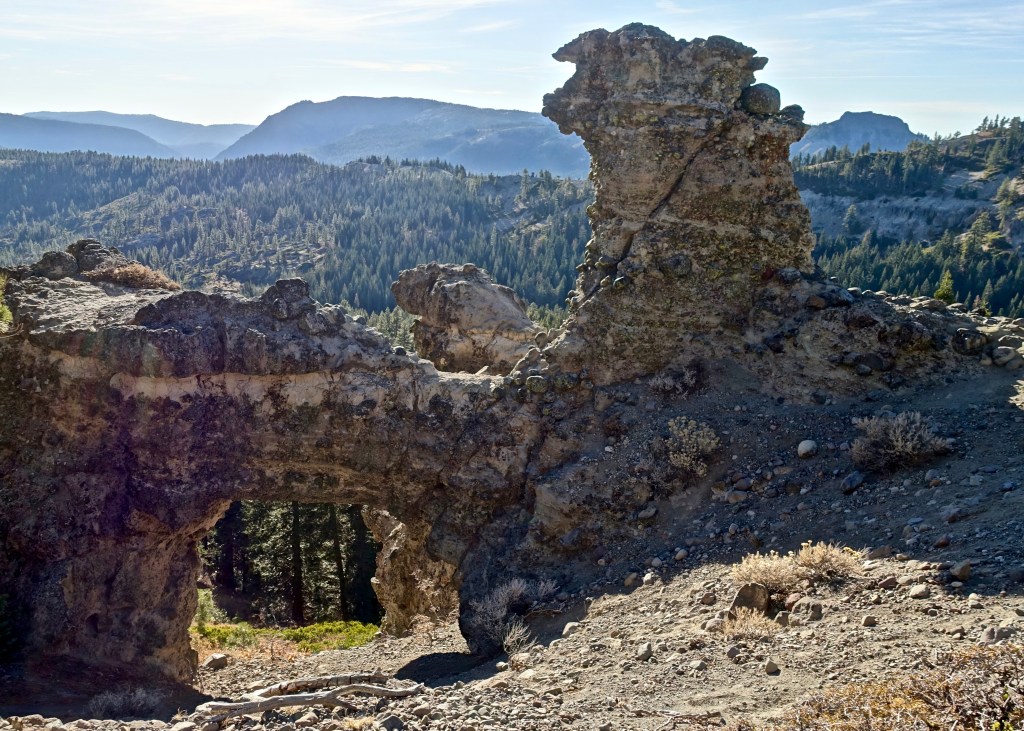
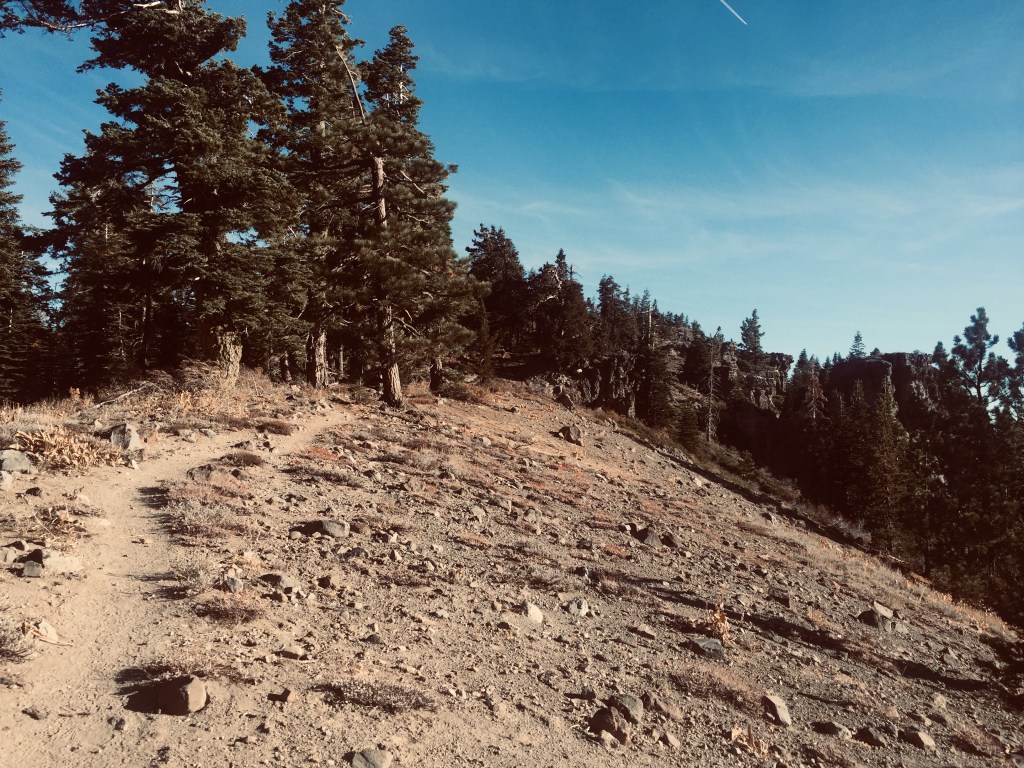
The ridge has outstanding views of the headwaters of both the Yuba and America drainages. Andesite, Castle, Donner, Judah and Mt. Lincoln dominate the Yuba, while Anderson, Tinker’s Knob, Granite Chief, Needle and Lyons Peak enclose the American. The ridge itself is composed of recent volcanic layers – ash, welded pyroclastic flows, and the andesite tower of Crow’s Nest. The two faces of the ridge, however, present strongly contrasting features. On the north, where the main ice field of the upper Yuba once covered the shoulders of the ridge to its crown, forest of White and Red Fir, Western White Pine, Sierra Juniper and Mountain Hemlock crowd the slope. Generally just below the ridge top, but sometimes at the top or even down the lee side a few meters are numerous glacial erratics – granodiorite – in striking contrast to the volcanic strata of the ridge itself. Jeffrey pines, in particular stand in exposed locales, often presenting broken tops and wind-sculpted limbs. The south or lee side of the ridge is steeper, mostly barren and deeply eroded into cliffs, ravines, and an irregular series of pillars and other asymmetrical forms carved out of the welded pyroclastic conglomerates. There is even one natural arch. The ascent to Crows Nest is steep only near the end, and the climb up the broken tower itself an easy class 2 scramble.
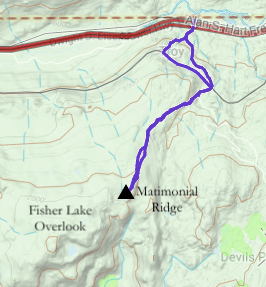
Matrimonial Ridge — 26 Nov. 2019, 4 miles return, elevation gain +971
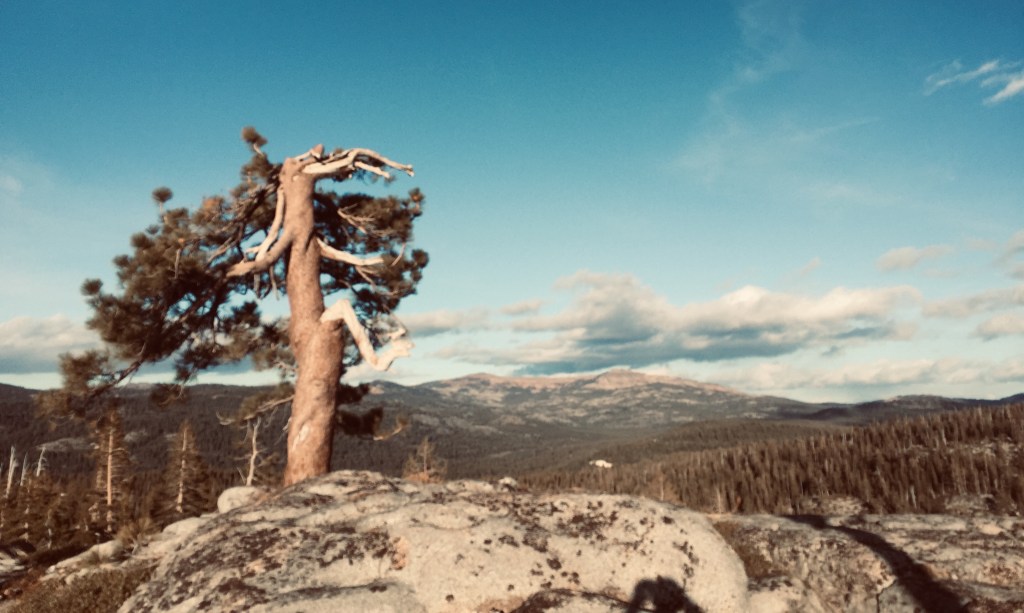
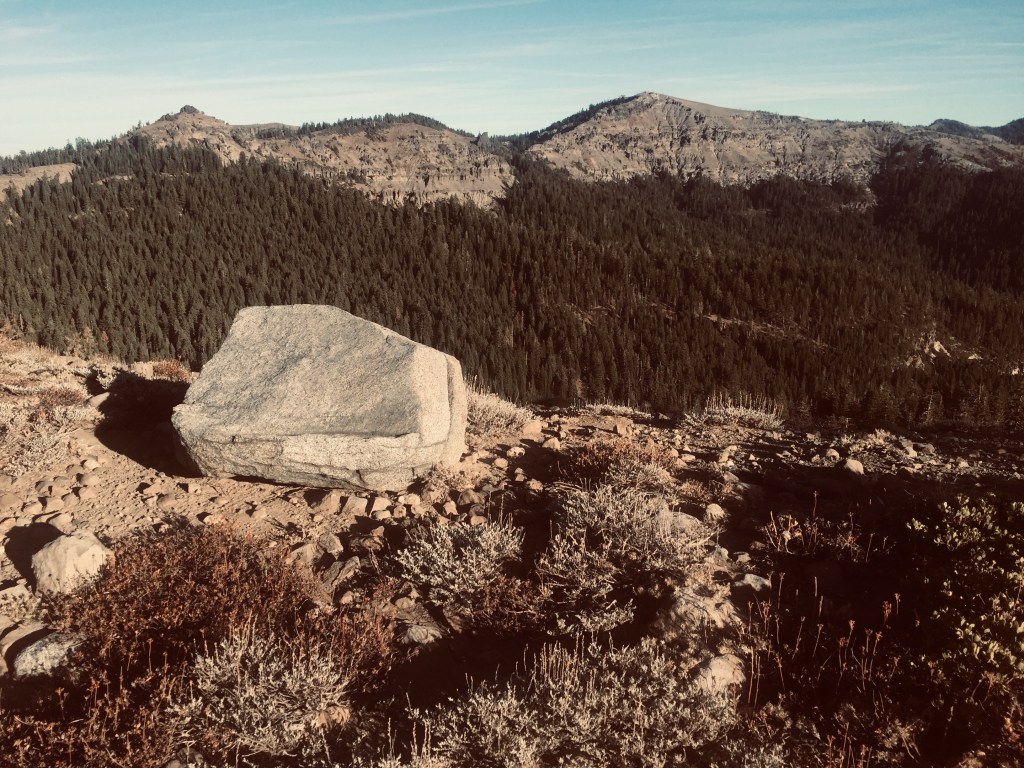
The climb from Hwy 80 and the South Fork of the Yuba River to Matrimonial Ridge is a standard ski, snowshoe or snowmobile route in winter. Without snow it is actually more difficult, with the last roadless, trail-less part of the route dense with forest and crowded with huckleberry oak and manzanita growing between granite ridges and benches. Reaching the first summit of the exposed ridge-top leading to Fisher Lake Overlook, a place informally called ‘Matrimonial Ridge,’ There is polished granite and two solitary Jeffrey Pines. Although overridden by glaciers here at some point, the ridge stands prominently above the landscape so that all of the Granite Creek drainage, once a great ice fall down to the American, can be seen, as well as many of the same peaks of the Yuba and American seen from Razorback Ridge. Nearby is Devil’s Peak, a cockscomb-like ridge composed of columnar andesite that stood above the glaciers and acted as a topological divide between two bodies of ice descending in parallel into the American. Also striking is the uneven terrain on both sides of the divide here. Numerous ridges, hummocks, and benches, all fashioned by the glaciers out of the granite bedrock stretch out across the landscape. It makes for complicated terrain with many small lakes. most of them at the Yuba-American divide, or further down into the American River drainage. Some of these lakes, such as the three Loch Leven Lakes, have trails to them and are popular destinations. Others, such as Nancy or Fisher Lake are cross-country trips and are infrequently visited.
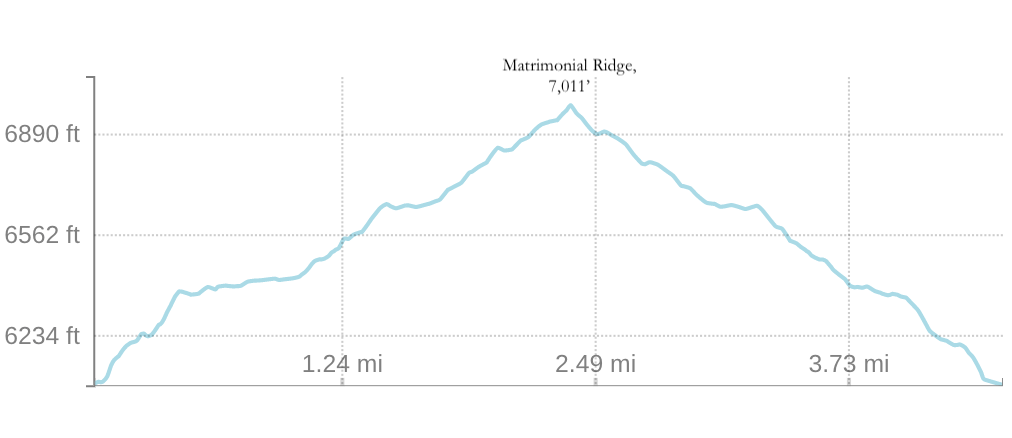
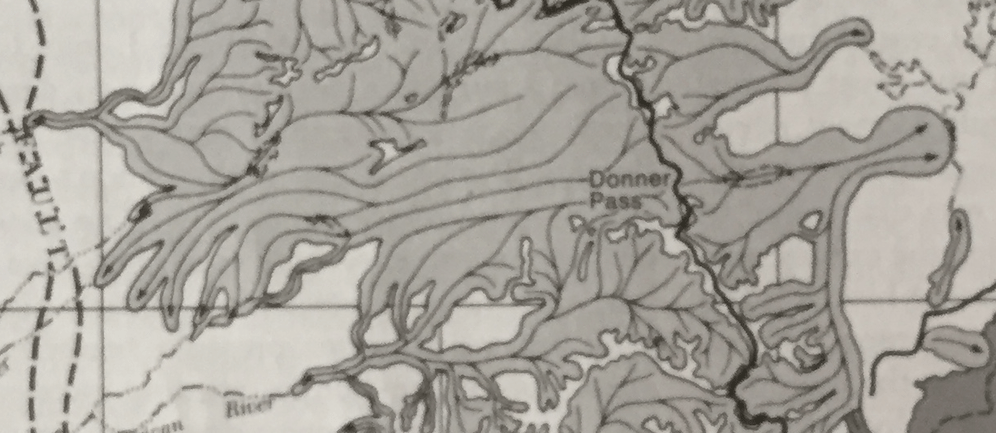
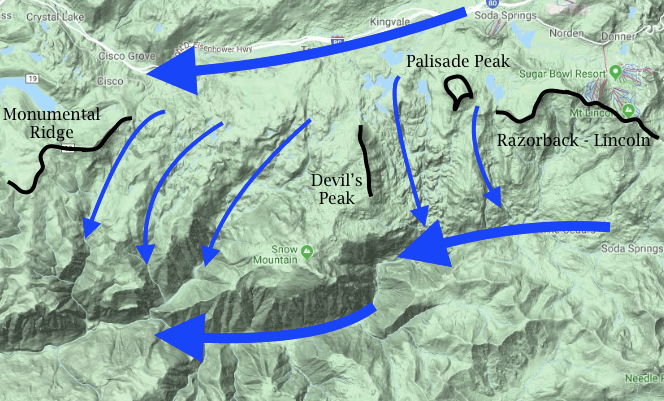
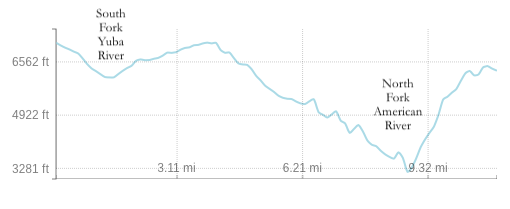
Glacial Maximum showing west and east flowing glaciers descending from ice fields along the Sierra Nevada Crest. Note the south-turning glacial tongues descending from Donner Pass area to join the North Fork American Glacier. From J. P. Schaffer’s, The Tahoe Sierra, 1999.Cross section showing the high glacial basin of the South Fork of the Yuba and the much deeper incision of the North Fork of the American. Both images adapted from Gaiagps.
In its large scale, the asymmetry of the two canyons — Yuba and American — is striking. Why was the American cut so much deeper? Did the overriding glaciers from the Yuba icefield contribute to this depth, or was there a pre-glacial reason? The position of the glacial passes between the Yuba and American is also interesting. From the Sierra Crest to Razorback Ridge there are no breaches in the divide between the two. Then, between Razorback Ridge and Monumental Ridge, much to the west, five major drainages cut down into the American, each one being a breach in the divide, with most of the divide in this section continuously overridden at the glacial maximum. Only two prominent features stood above this icy inundation — Palisade Peak just west of Razorback Ridge, and Devil’s Peak, which extends out south to the high wide ridge of Snow Mountain, also glacier-free.
Standing atop Matrimonial or Razorback Ridge one sees clearly how these two watersheds – the Yuba and American — are intimately linked topographically, yet dramatically different.
 Are we not
 Like the rain beetles
 Males flying about urgently
 After rain first soaks
 The forest floor in fall
 For a few hours
 Then no more
 Each searching
 For that one
 Female
 Soaked in pheromones
 Waiting
 At the entrance
 Of her egg burrow
 There to mate
 And both
 Soon to die?

 Are we not?

 And why then
 Do we judge our path
 Through this universe
 More noble and right
 More fitted with the purposes
 Of heaven?

 When these ancient ones
 Still sell their
 Hairy-legged, hard-bodied
 Aerial dances
 As if there were no other way
 To be with God.


 23 November 2018
 Cedar Ridge, Sierra Foothills
* Pleocoma, from the Greek, ‘abundantly hairy,’ the genus name for the 25 or so species of rain beetle found from California to Washington that wait sometimes for years for a first heavy rain of fall before emerging to complete their life cycle.
I wandered lonely
     trackless
Having left trail
out of forest
broken and decayed underfoot
following hummocks
of granite spine
     into cloud-driven sky

On cold summits
With their solitary jeffrey pines
earth lay down
     Its argument
Wide, fulsome, all things
woven into the other
the very vastness of vision
A kind of bread
To eat
So that I need not even
Spill blood
     To be brother
With the cliff-edge rocks
We who ride together
this wheeling, spherical
     earth turtle
into starlight.


25 November 2019
Fisher Overlook Ridge, 7011'
A day before first winter storm
They lay heavy
over the earth here once
hundreds of feet thick
Riding the eroded volcanic ridge
     Itself the ruin of millions year older
          Pyroclastic flows
Down from mountain crest
     Leaving
Rounded granite boulders
Larger than tables
Carried from
Donner Peak, miles away
     Crumbs
To this ancient white monster
Scattered just below
Ridge's edge

Now it is pillar saint
     Jeffrey Pine
flat-topped, limbs sculpted
Into grand upward gestures
Recumbent manzanita and huckleberry oak
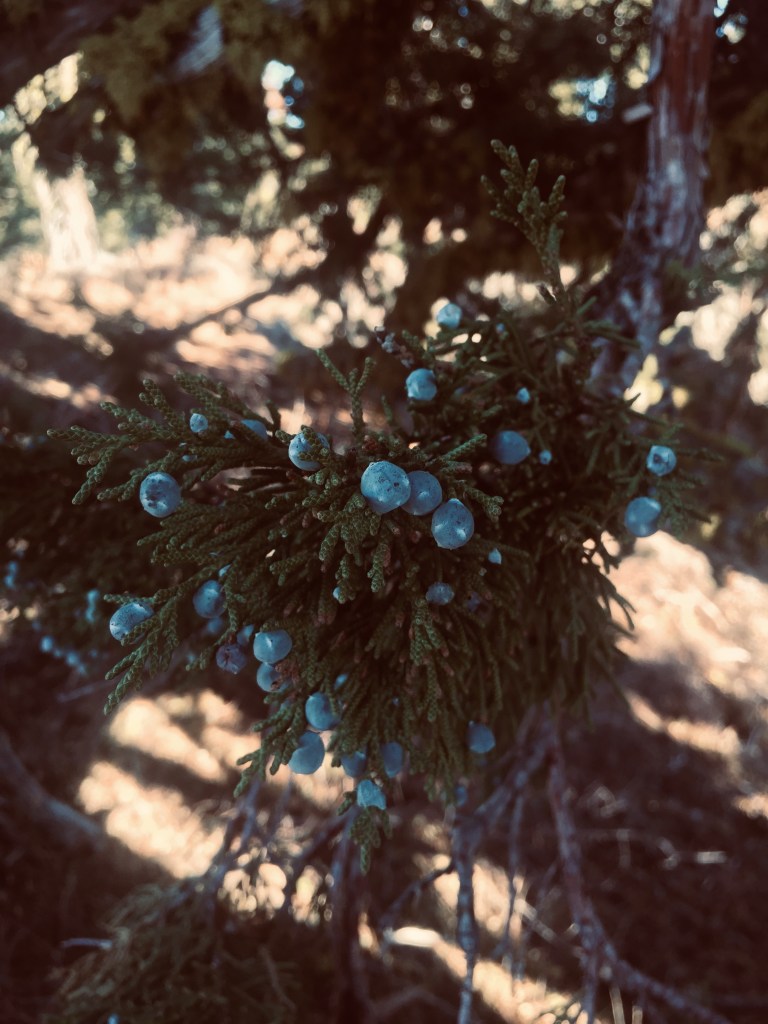
Massive old Junipers
     Berries ready for harvest
Volcanic gargoyle pillars
     Carved into ridge's lee side
Conglomerate torsos, arches, fists
     ...And I, who am
Dancer on this parapet line
Between watersheds
     Yuba - American
Their long-lost ice streams
flowing still
as ghosts filling the open spaces
of wide canyon.


17 November 2019
Razorback Ridge-Crows Nest, 7,500-7,900'
High cirrus and blue sky
Stars climb over the ridge holding luminous heads high into the darkness— clambering ants intent only on their ascent oblivious to the solitary glow of waxing moon commanding western horizon.
Steep avalanche path I scrambled up in twilight, reaching its gurgling mouth of water waist–high cow parsnip meadow at my feet green tops of forest crawling over raw flanks of peaks . . . all gone now.
In their stead one broken shard of obsidian-horizon winds scrapping at the valleys the curlew footprint of moonlight on mottled sand–bars of cloud brighter, more insistent the clambering stars.
A shudder passes through me, alone in this unyielding— as close to twig cloud, deer imagined in the darkness, to quartz as to my humanity.
Death and life make no difference for wind rubbing skin to skin on the night earth for star or forest... or hemlock sapling propped against rock–fall boulder.
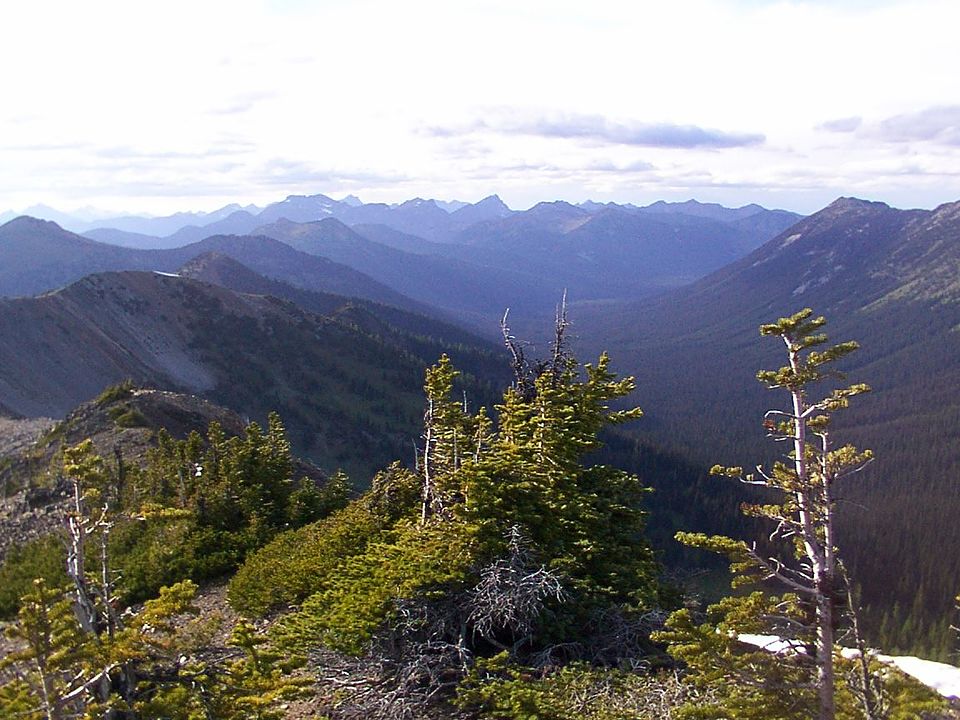
9 July 1992 Rattlesnake Creek Pasayten Wilderness North Cascade
In the summer of ’92 I made a road trip to visit friends in the ‘greater west,’ stopping at Bend, Oregon, Missoula, Montana, and Lopez Island, Washington. Along the way, I ventured into various out of the way places, including this one-night foray into the Pasayten, close to the Canadian border.
      A friend
 Returning from Bhutan
 Gave me a book
 On Emptiness…
      Shunyata — Nagarjuna’s four-fold
 Dialectic
 Philosophical nuance and explication
 Argued in monastery
 Courtyards on the roof
      Of the world.

 Yes, fill me with that talk
 Of the emptiness of self - the Buddha way
      Or contrawise
 Of Christ’s fullness - his pleroma
      Declaimed by a Chrysostom
 Or Origin
      Against wine-dark waves
 Of an Ionian sea.

 …On mountain paths
 It is all the same, these word scarves
 We wear to keep
 Wind out, to helpfully
 Trip us up, so that
      Wordless
 We stumble
 Into what saves us.

      Far
 From Himalayan caves
 Or Mediterranean
 Churches
 I pick up one acorn cap
      On the trail
 Empty
 of its nut
 Even as a fragment
      Still full
 Of tree and forest
 Rain, mountain lion
 And sky

 Standing still
      Mountain rides me
 Into darkness
 And back
      To light.


 22 November 2019
 Cedar Wings Cottage, 2680’
 Cold sky full of cloud
* Narajuna’s Mūlamadhyamakakārikā (Root Verses on the Middle Way) c. 200 CE, first sets forth the four-fold dialectic that denies affirmation of both the existence and non-existence of things as a way to clear space for the Buddhist notion of emptiness. John Chrysostom and Origen of Alexandra were 3rd-4th century theologians both influential particularly in the Eastern Orthodox tradition. The Greek pleroma finds its way into the canon as a technical term largely through Paul’s Epistle to the Colossians.
November
 Drier than it has ever been
 In its meteorological silence
 Red roses bloom

 In the year 709
 From the founding of Rome
 Ab urbe condita
 Our 46 BCE
 Julius
 Great reformer, soon to be murdered
 reset the days
 To end the ‘wandering years’
 And its calendrical
 Confusion

 Yet drift the days still did
 By 3, said Bede in 800
 By 7 or 8
 Thought Roger Bacon much later
 Until again, from that same
 Rome
 Pontifical proclamation
 Added 10 days to the year 1582
 In an instant
 So that anniversaries and birthdays
 Were missed
 But human order now matched
 The flow
 Of the cosmos.

 Yet now
  in November
 The red rose blooms

 Calendrical days do not veer
 But earth itself
 We reread the ancient apocalypses
 For the like of their
 strange signs
 Flood and hurricane
 Pestilence, war
 Melting ice

 Seasons slip
 False springs occur
 We untruth the world
 And hide from it
 Saying that it, not us
 Is fake

 And still, the red rose
 Blooms.


 24 November 2019
 Cedar Wings Cottage
 Dry earth and cloudless sky
* Ab urbe condita, from the founding of the city (Rome), Compare the Byzantine ‘etos kosmou,’ marking its calendrical year from the creation of the cosmos. In similar fashion to the work of Julius and Gregory, the International Committee on Stratigraphy is considering a date for our current geologic age, the Anthropocene, most likely dating from the deposition of radionuclides around the globe caused by nuclear testing from the 1950s.
 As I pace the shore
 Of a cirque-lake
 Down from the col
 Entranced by its glistening
 Skin that dances
 An endless dance
 With no figures or progressions
 Save the figures of wind
 And the progression of sun
 Suddenly a surge of anguish
 Passes through me
 That I will not always
 Be here to watch
 Be here to be
 The spectator, unnoticed
 But must drink once
 Then pass.

 Lucky the trees
 That hold this shore
 Even in death
 They wear their eyes
 Now gnarled and weathered skeletons
 That mark their yearning
 Their thirsts, their plenties
 And they, torn down
 To the shore by time
 Broken to dust by countless storms
 Do lay themselves
 In water’s mouth
 To join as one
 In the cirque-lake dance.


 29 August 1981
 Sphinx Basin, below North Guard
 High Sierra
While still in college I hitchhiked out to Cedar Grove in the Canyon of the Kings, a parallel Yosemite, as Muir thought of it, and climbed steeply up the Sphinx Creek trail, solo, vague about telling backpackers where I was headed, seeking solitude, continuing up the drainage, cross-country, while the trail veered off toward Avalanche Pass. Camping at the high lakes, the summit and winged shoulders of North Guard embracing me, I camped and next day scampered up talus and scree to a slight col, beyond which stood high Mt. Brewer further south on the Great Western Divide, an easy journey to its base across smooth glacial slabs, then class 3 up a chute to the summit, myself chanting the ‘Jesus Prayer’ to keep confident and in rhythm on uncharted rock. Little in record remains of that adventure, save this poem written upon returning from the peak to the barren, high lake of Sphinx Creek Basin.

 Mountaineity