Here’s to you, brave boys
      Let me say it loudly

 Outside Colfax
 On the Old Highway Road
      Near the start of our trail
 The bronze plaque
 Says you took the mountain
      Stormed the citadel

 Cape Horn

 Blasting flat the railroad grade
 Across a continent
      You broke down the door
           Let in the future

 And here’s to you, laughing women
      Of the canyon
           Hundreds of feet below
 We have hiked into
      At the end of trail
           Long way from road and town

 You leave only your

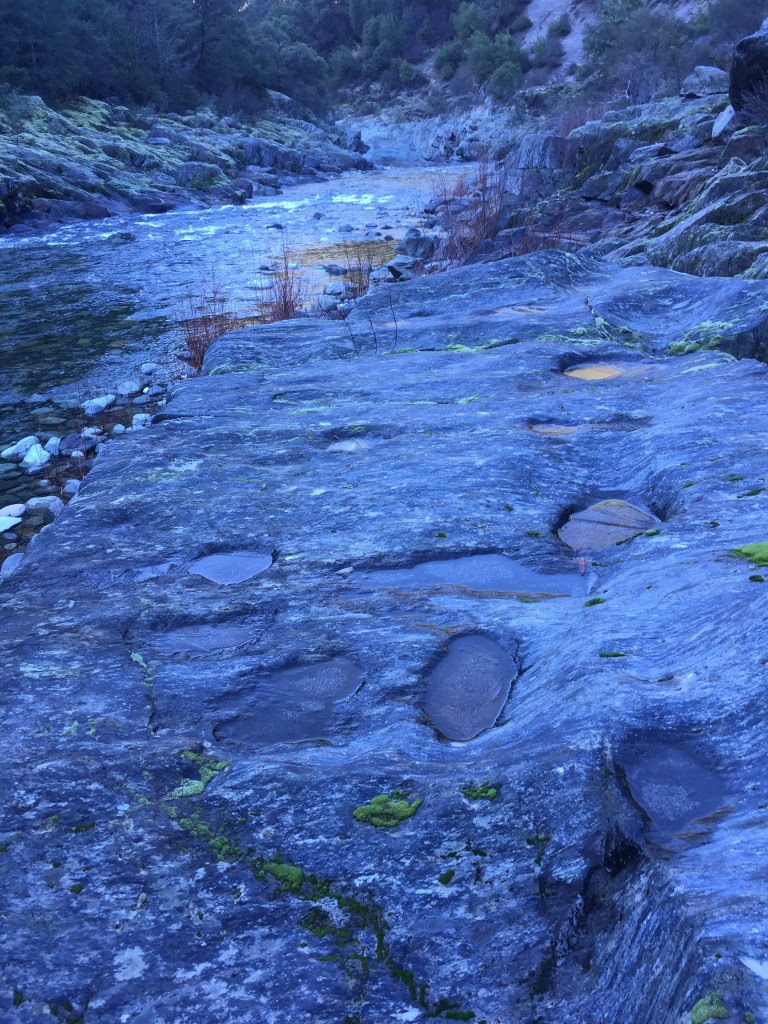
      Bedrock mortars

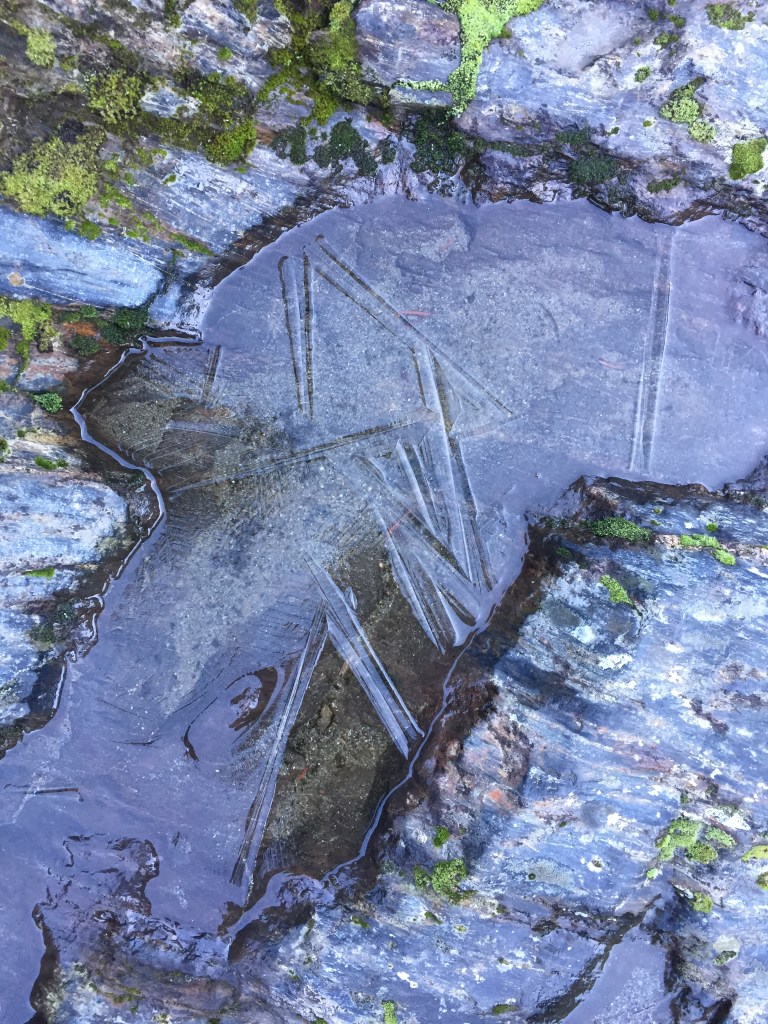
 Shallow, easily missed, covered in ice
      On this cold December.

 The acorn way
      Sunlit tree to stone
 Meal to mouth
      Belly to laughter
 Back to sunlight

 Let me whisper it quietly
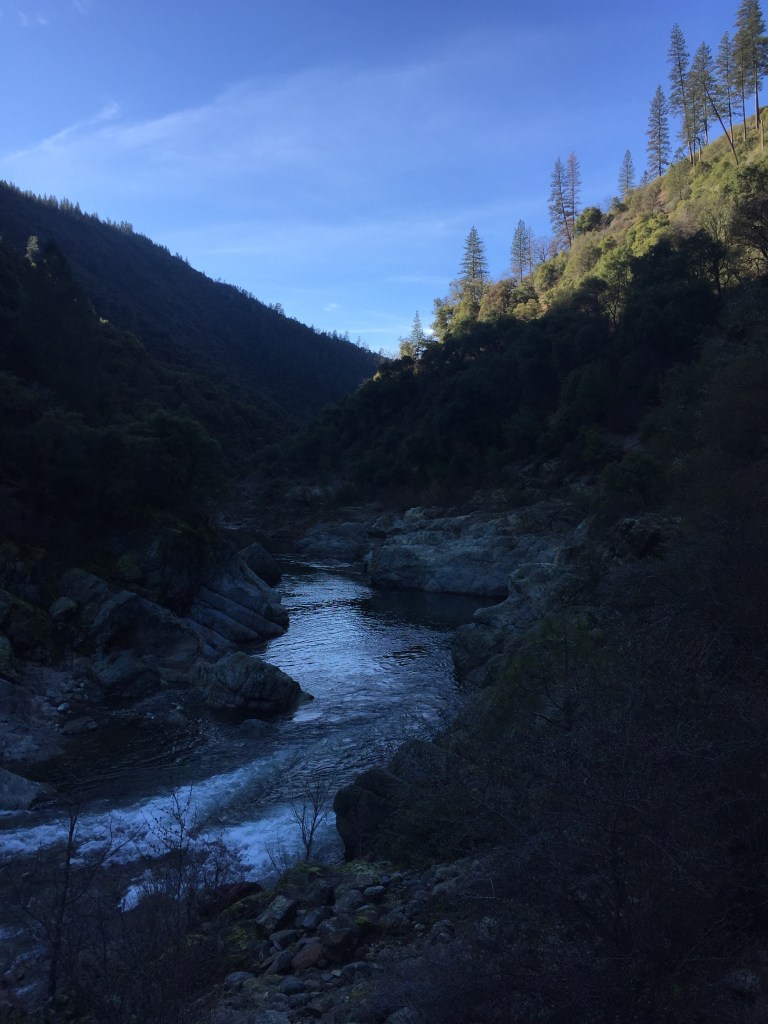
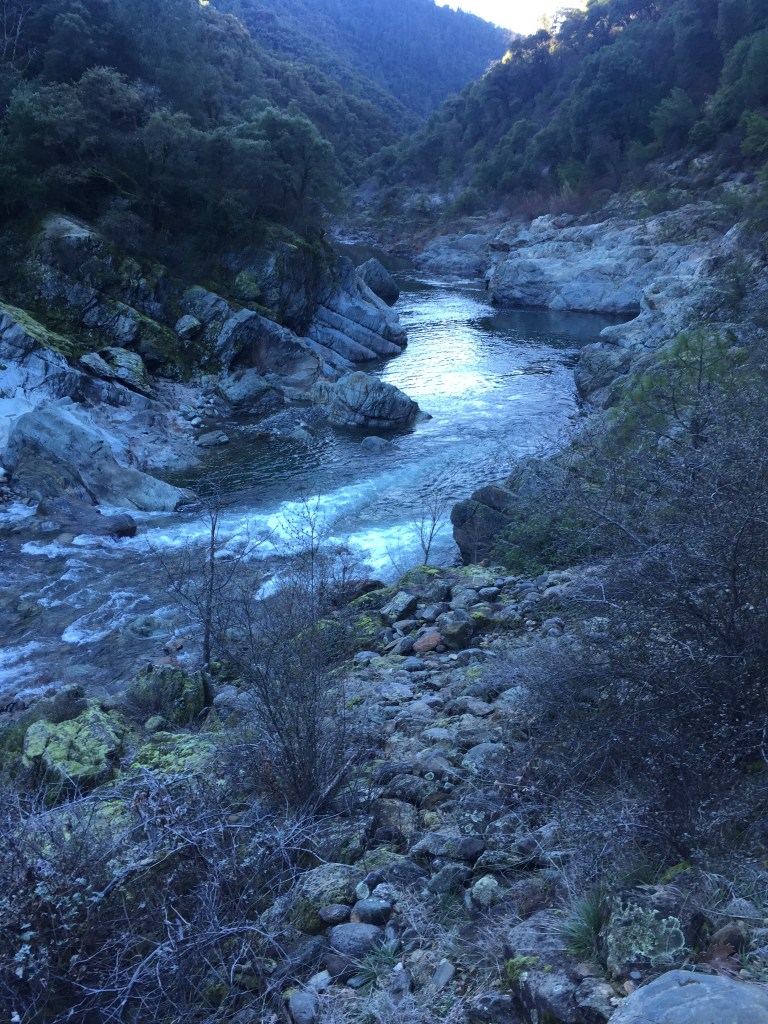
 In the cathedral bottom
      Of this slate Sierra canyon

 How you left markers
 Of gratitude
      No continent to cross
 Everything already

 Here


 27 December 2019
 North Fork of the
 American River, 1300’
 New moon & blue sky
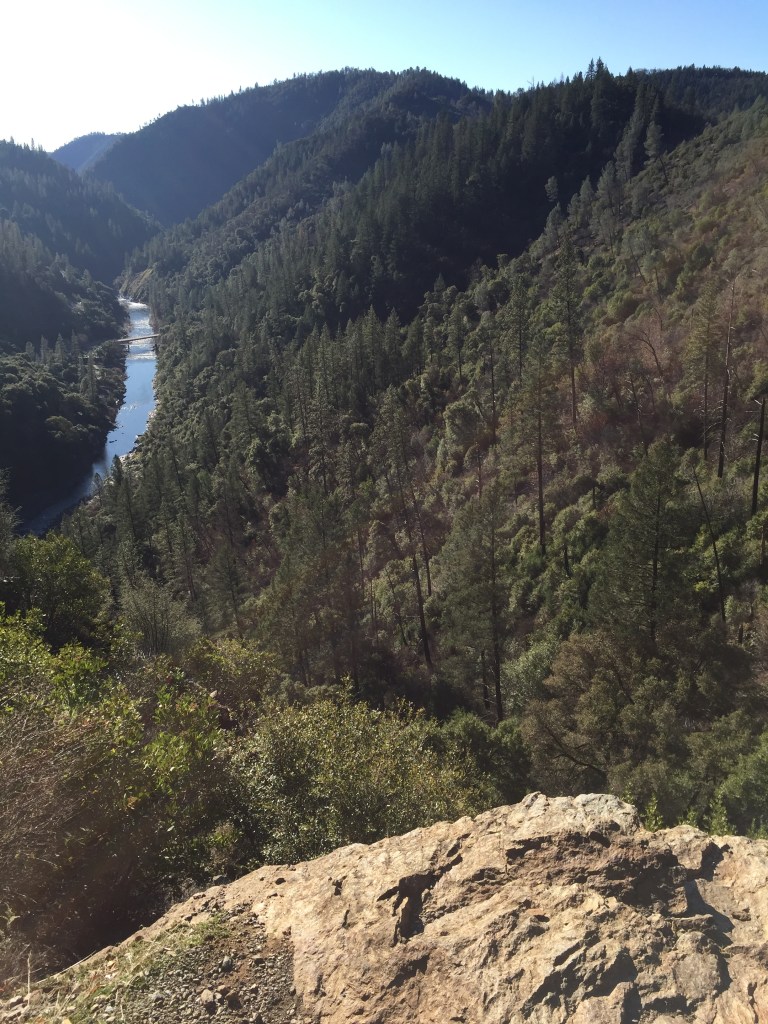
* Stevens Trail drops 1400 feet from the outskirts of the town Colfax, originally Stop 20 in the long process that built the transcontinental railway in the 1860s. Like many trails in the Sierra foothills it began as a mining track, in this case turned into a toll road, named after a Truman A. Stevens. When built it traversed its way down into the North Fork American River Canyon crossing over to the mining town of Iowa Hill on the far side. Today, the neglected road has become a trail once more, a popular 8 miles or so (the BLM sign suggests 9 miles) round trip to the river and back.
* Cape Horn, location of the first double turn steep mountain obstacle in the building of the railroad over the Sierra coming from west to east, quickly became dramatized in the tourist guides of the day with tales of ‘celestials’ (Chinese) swarming like ants over the slopes in order to ‘storm the mountain citadel,’ some imagined to be dangling in wicker baskets held by ropes from above as they drilled into rock and set charges on dangerous sections of vertical cliff, sometimes falling to their deaths. All this was part of the aggrandizement of the railway both as an engineering marvel, an emblem of the age, and as a tourist wonder. The name Cape Horn recalls the crux crossing point in the sea journey to California, Cape Horn at the tip of South America, claiming here that this difficult rail crossing of the steep slate shoulder of the American River Canyon was its own crux enabling a new, futuristic crossing of the continent. In early years passenger trains would regularly stop at Cape Horn to let travelers admire the view down the American River Canyon.
* Bedrock mortars or grinding holes are places where indigenous people, here likely the Nisenan, prepared food gathered nearby, grinding acorns, seeds, roots or berries. These hemispheric depressions carved into hard, flat rock over a period of decades or perhaps centuries speak of the cultural continuity, so different from the ‘hot,’ disruptive culture of our modern experience, of a people deeply integrated into a landscape that is their grocery store and kitchen, gathering ground and sacred place.


Hope to hike the Stevens Trail 2020
LikeLike